License & Specialty Plates

Illinois License Plate Production here at mRI
A high‑efficiency, fully traceable manufacturing operation designed to meet the State of Illinois’ requirement of up to 17,000 license plate pairs per day—while creating meaningful employment opportunities for those that have developmental disabilities.

Our production flow begins with advanced automation designed for consistency, volume, and quality.
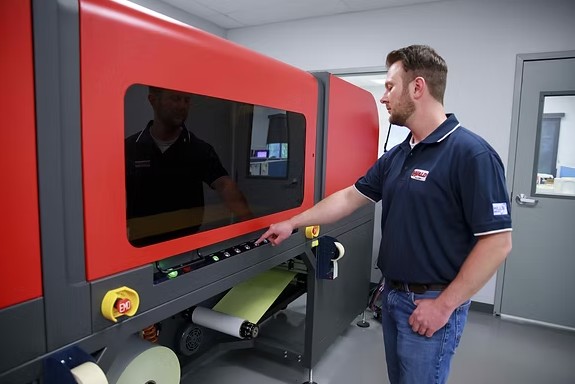
- State‑of‑the‑art Print Room with temperature and atmosphere controls to ensure optimal ink adhesion and color accuracy.
- Three DigiTag TriJet UV Inkjet Printers produce up to 1,766 plates per roll, using UV‑cured inks on customized reflective film for durability and visibility.
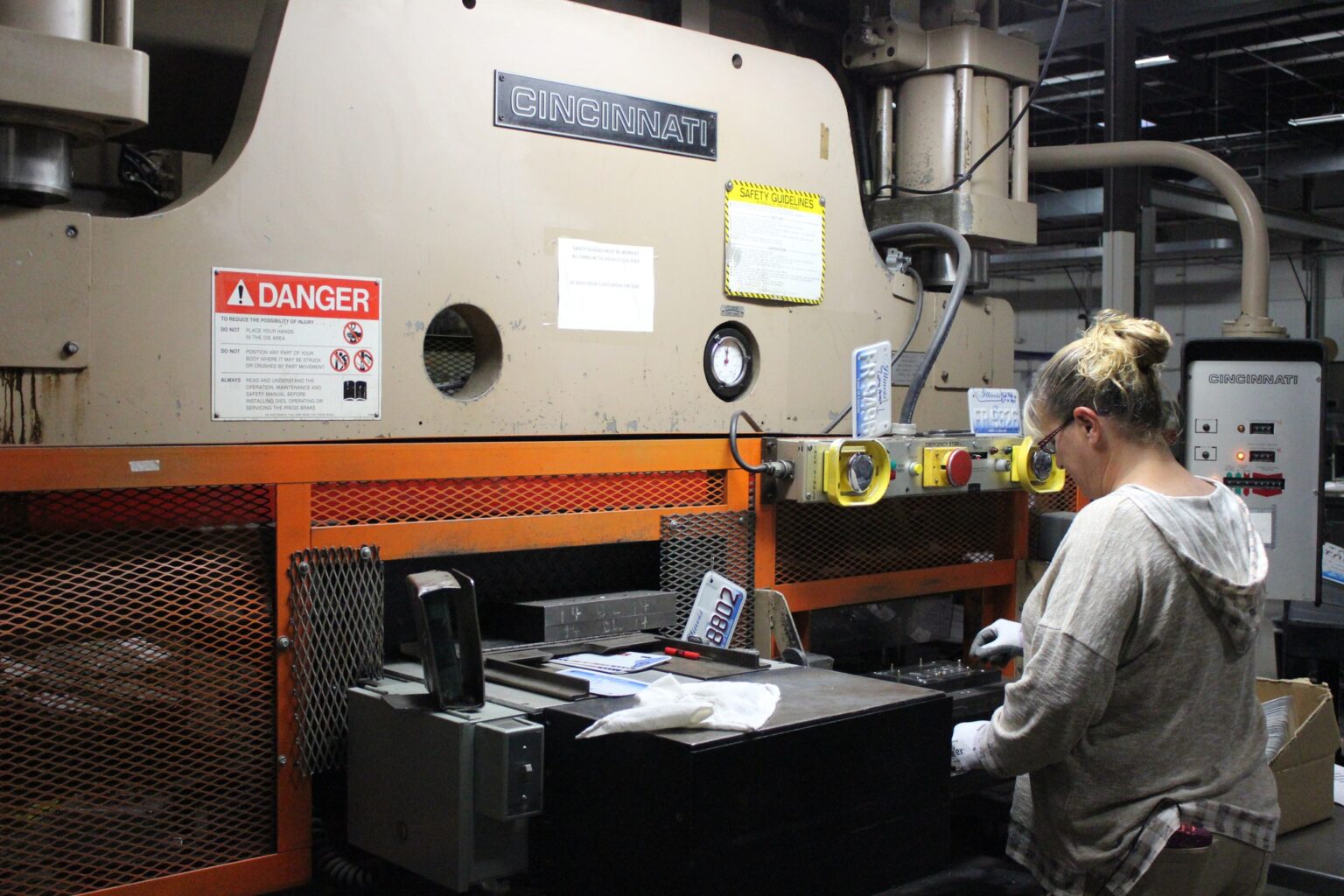
- Two high‑capacity blanking presses merge printed film, a protective clear overlaminate, and aluminum coil into finished plates with precise alignment and uniformity.
- Plates exit the line in bundles of 50 pairs, creating a stable buffer that keeps downstream operations running smoothly even during peak demand.
This automated front end ensures consistent quality and protects the rest of the plant from production interruptions.
Every plate is tracked from print to shipment to maintain full regulatory compliance and order accuracy.
- Batches are sorted by production order number and staged in FIFO order to preserve sequence integrity.
- Real‑time tracking of serial ranges, machine productivity, reject rates, and operator output ensures complete visibility.
- Integrated data systems allow rapid auditing, quality verification, and shipment confirmation.
This disciplined approach ensures every order is produced in the correct sequence and delivered with complete traceability.
- Stations are arranged in balanced rows with centralized character storage for fast access and uniform workflow.
- Each character is manually changed, ensuring accuracy and craftsmanship.
- With 90% of orders being sequential, operators typically adjust only the final digit between plates, allowing high throughput without sacrificing quality.
- Supervisors oversee output to maintain consistency across all stations.
This blend of manual skill and structured workflow ensures embossed plates meet strict state standards.
- Plates are shrink‑wrapped for protection before entering the Labeling Department.
- Labeling is intentionally non‑automated to provide structured, meaningful work for developmentally disabled team members.
- Tasks include label placement, pairing, and visual inspection, supported by job coaches and supervisors.
- Higher‑skill individuals work independently across other departments.
- 100% visual inspection ensures all plates meet quality, sequence, and order requirements.
- Plates are scanned and barcoded into the system, confirming they are complete, accurate, and ready for delivery.
- This final checkpoint ensures shipment accuracy and full traceability for state compliance.
By combining high‑speed automation, disciplined manual processes, inclusive workforce design, and rigorous quality controls, the facility consistently delivers:
Up to 34,000 plates (17,000 pairs) per 10‑hour day with exceptional accuracy, reliability, and compliance.